Local Movers for Hire in Buffalo: The Complete Guide to a Smooth WNY Move



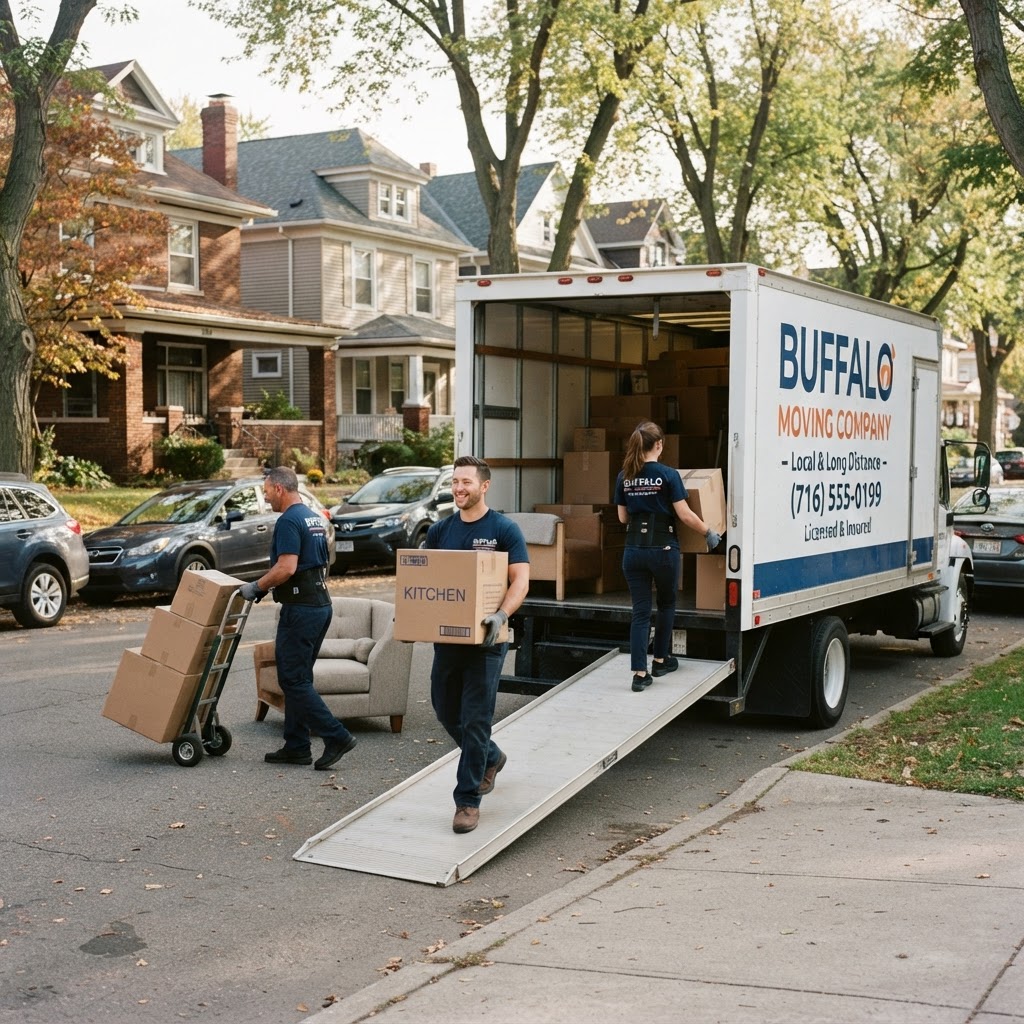
Local Movers for Hire in Buffalo: The Complete Guide to a Smooth WNY Move
When you need local movers for hire in Buffalo, NY, the stakes are higher than most people realize. Buffalo's older housing stock, narrow city streets, brutal winters, and distinct neighborhood personalities all create moving challenges that out-of-town or inexperienced crews routinely underestimate. Whether you're relocating from the East Side to Elmwood Village, downsizing in Amherst, or making your first apartment move in Allentown, hiring the right local moving team is the single biggest factor determining how smoothly your move goes. At Alpaca Moving Services Inc., we've completed thousands of moves across Western New York and understand exactly what it takes to execute a stress-free Buffalo relocation.
Buffalo is a city of tight timelines and unpredictable weather. Spring and summer — May through August — represent the city's peak moving season, when demand for local movers spikes and booking windows shrink to as little as one to two weeks. In fact, weekends in June and July are often booked solid within 72 hours of availability opening up. Moving companies in the Buffalo metro area routinely report scheduling backlogs of three to four weeks during peak season, meaning if you wait until early June to book a late-June move, you may be left choosing between inexperienced crews and missed deadlines. Fall and early winter bring cheaper rates — often 15 to 25 percent lower than peak season pricing — and more flexible scheduling, but you'll need to plan for snow, ice, and early darkness. A move that takes four hours in September can take six in January when crews must lay down floor runners, salt exterior steps, and navigate icy driveways with loaded dollies. Understanding these seasonal rhythms helps you negotiate better pricing, secure your preferred date, and avoid the logistical headaches that catch unprepared movers off guard every year in this region.
This guide covers everything you need to know about hiring local movers in Buffalo: what to expect on moving day, how crews are typically structured, what things cost, local permit requirements, and the specific neighborhood factors that affect your move. By the end, you'll be equipped to hire confidently and avoid the most common mistakes Buffalo residents make when booking a moving crew.
What to Expect on Moving Day in Buffalo
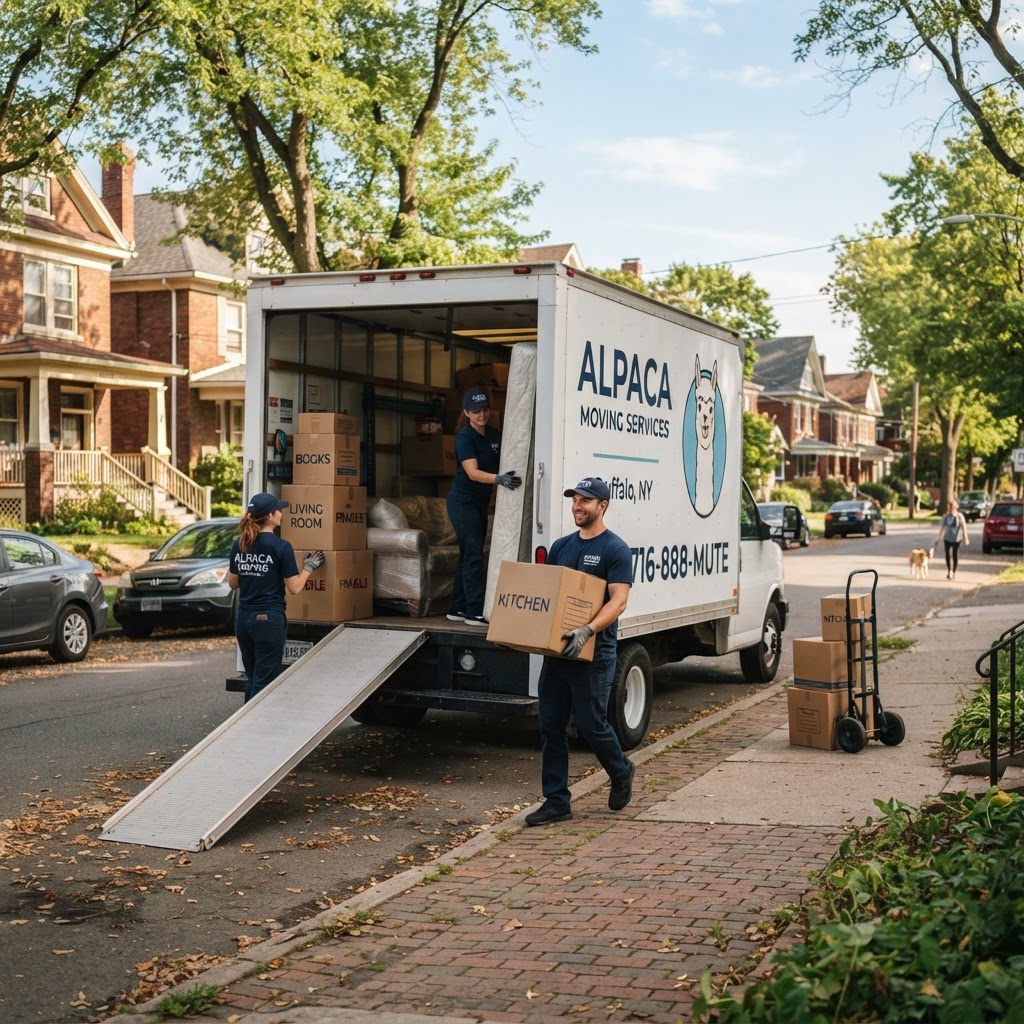
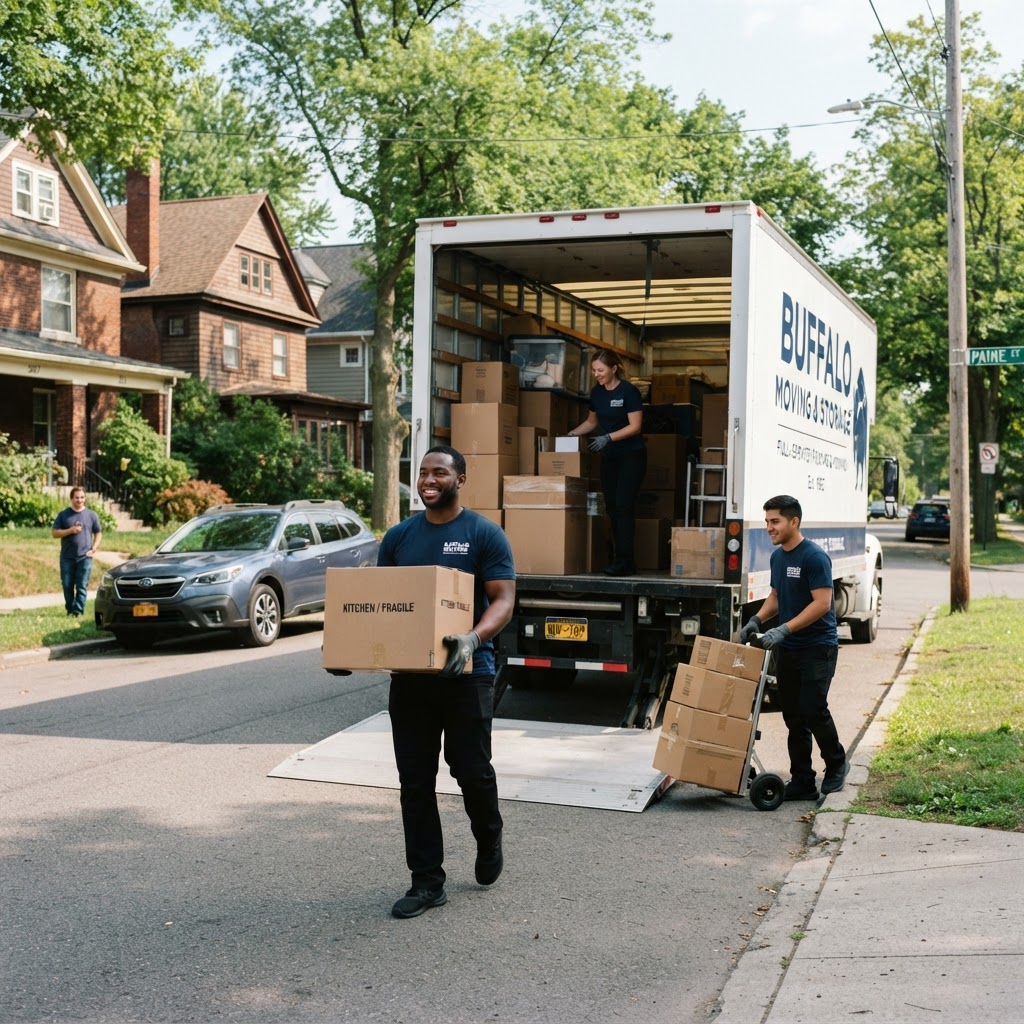
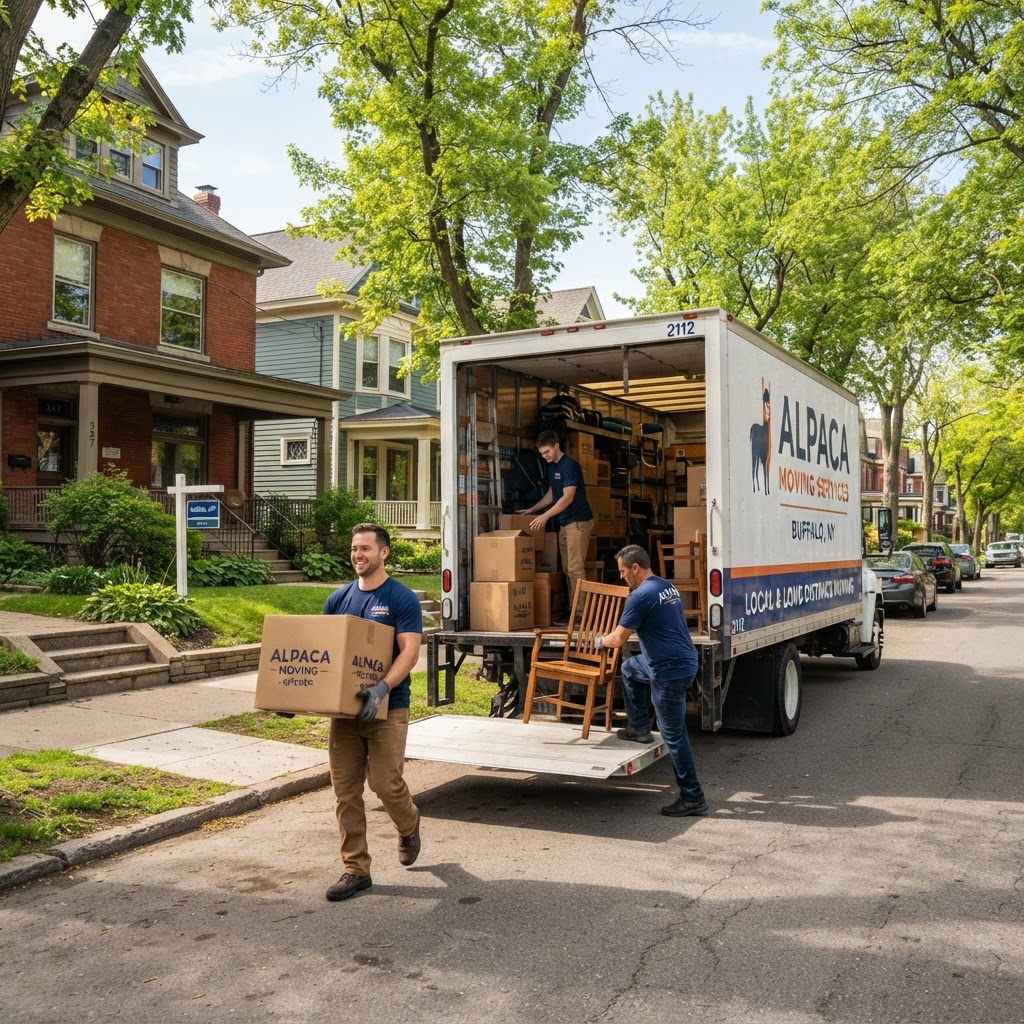
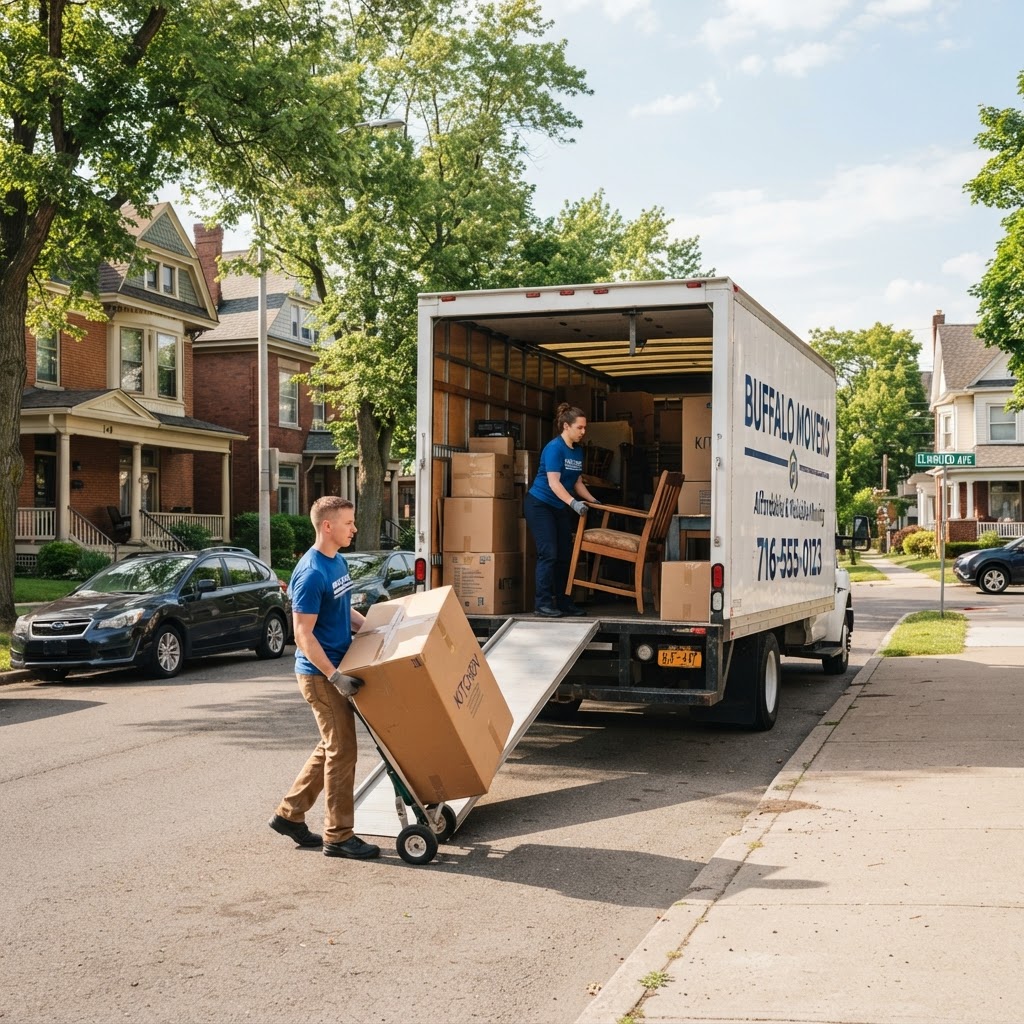
Moving day in Buffalo follows a predictable structure, but the details matter enormously. Most reputable local moving companies will arrive in a 26-foot box truck or a 16-foot straight truck, depending on the size of your home. A standard two-bedroom apartment move in Buffalo typically requires a two-person crew and a 16-foot truck, while a three- or four-bedroom home in the suburbs of Amherst, Cheektowaga, or Orchard Park usually calls for a three-person crew and a larger vehicle. Alpaca Moving Services dispatches based on a pre-move inventory assessment so the right equipment shows up the first time — not a truck that's two sizes too small.
Arrival windows are typically one to two hours wide, meaning a company may say "between 8 and 10 a.m." rather than committing to a precise time. This is standard industry practice because crews finish earlier moves at variable times. Once the crew arrives, the lead mover will do a brief walkthrough of your home to assess furniture placement, stairwells, tight hallways, and any items requiring special handling. Buffalo's Victorian-era homes — common in neighborhoods like Delaware District, Elmwood Village, and parts of the East Side — frequently have narrow 28-inch doorways, steep staircases with low overhead clearance, and decorative moldings that can be damaged if crews rush. A good crew will wrap furniture in moving blankets, use corner guards on doorframes, and stretch-wrap any items with drawers or doors that could swing open in transit.
The actual loading process for a two-bedroom move typically takes 90 minutes to two hours. Transit across town — say, from South Buffalo to North Buffalo — adds another 20 to 40 minutes depending on traffic. Unloading is generally faster than loading and usually takes 60 to 90 minutes. Budget for a total move time of four to six hours for a two-bedroom home and six to nine hours for a three- or four-bedroom house.
How Moving Crews Are Structured and What It Costs
Local moving companies in Buffalo typically charge by the hour with a two-hour minimum. As of 2024, hourly rates for a two-person crew in the Buffalo area range from $110 to $145 per hour. A three-person crew runs between $145 and $185 per hour. Most companies also charge a flat travel fee or a "truck fee" ranging from $75 to $150, which covers fuel, truck maintenance, and mileage to and from the job. Some companies roll this into their hourly rate, so always ask upfront whether the quoted rate is all-inclusive.
For a real-world example: a two-bedroom apartment move in Allentown, with a two-person crew at $125 per hour, taking five hours total, plus a $100 truck fee, would cost approximately $725 before tip. A three-bedroom home move in Amherst using a three-person crew at $165 per hour, running eight hours with a $125 truck fee, would come to around $1,445. Tips are not required but are customary — $20 to $40 per mover is a reasonable range for a standard move, with more appropriate for moves involving stairs, heavy specialty items like pianos or gun safes, or particularly difficult weather conditions.
When getting quotes, use platforms like HireAHelper, Thumbtack, or Moving.com to compare baseline pricing, but understand that locally owned Buffalo companies — including Alpaca Moving Services — often provide more competitive rates and better knowledge of local conditions than national franchises. Always request a written, itemized estimate rather than a verbal quote. New York State law requires movers to provide a written binding or non-binding estimate before the move begins, so any company unwilling to put a number in writing is a red flag.
Neighborhood-Specific Factors That Affect Your Buffalo Move
Buffalo's neighborhoods are not interchangeable from a logistics standpoint. Understanding the quirks of your specific origin or destination neighborhood can save you hours and hundreds of dollars.
Elmwood Village and Allentown are characterized by dense on-street parking, narrow lanes, and homes built in the late 1800s and early 1900s. Most properties have no driveway, meaning your movers will need to park the truck on the street and carry items 30 to 60 feet to the door. If the truck blocks traffic or a fire hydrant zone, the City of Buffalo's Department of Public Works can issue a $65 to $115 parking ticket. For moves in these neighborhoods, it's worth calling 311 at least five business days in advance to request a temporary no-parking zone permit, which typically costs $25 to $50 and reserves curb space directly in front of your home for moving day.
South Buffalo tends to have more driveways and off-street access, making truck placement easier, but many homes have finished basements with steep external stairwells — an often-overlooked detail that adds significant time and physical demand to a move.
Amherst, Williamsville, and Clarence offer wider streets and more modern construction, but longer drives from Buffalo proper mean higher travel fees and more time on the clock. A move from the Elmwood Village to Clarence Center could easily add 45 minutes of drive time round-trip.
Downtown and the Canalside area involve high-rise or multi-story buildings with freight elevators, loading docks, and building-specific move-in windows. Many downtown Buffalo apartment complexes require movers to reserve the freight elevator in advance — sometimes 48 to 72 hours ahead — and restrict moves to certain hours (often 8 a.m. to 5 p.m. on weekdays only). Failure to coordinate this detail can result in your crew arriving to find the elevator occupied, adding hours of waiting time to your bill.
Permits, Insurance, and Verifying Your Mover's Credentials
New York State requires all intrastate movers to be registered with the New York State Department of Transportation (NYSDOT) and to carry liability and cargo insurance. Before booking any Buffalo moving company, ask for their NYSDOT registration number and verify it at the NYSDOT website. You can also check a company's complaint history through the Better Business Bureau's Buffalo/Western New York office or through Google and Yelp reviews.
Standard released liability coverage — which most moving companies provide by default — reimburses only $0.60 per pound per item. That means a 50-pound flat-screen television worth $800 would be reimbursed at just $30 if damaged. If you have high-value furniture, artwork, electronics, or antiques, consider purchasing full-value protection from your mover (typically 1 to 2 percent of the declared value of your goods) or check whether your homeowner's or renter's insurance policy covers belongings in transit. Companies like State Farm and Erie Insurance — both of which have strong presences in the Buffalo market — offer riders that cover moves for an additional $20 to $75 depending on coverage level.
---
Frequently Asked Questions
How far in advance should I book local movers in Buffalo?
During peak season (May through August), book at least three to four weeks in advance. In fall and winter, one to two weeks is usually sufficient.
Do Buffalo movers work in the winter?
Yes. Reputable companies like Alpaca Moving Services operate year-round. Winter moves require additional prep time and floor protection but are entirely manageable.
What is the average cost of a local move in Buffalo, NY?
Most two-bedroom moves fall between $600 and $900. Three- and four-bedroom moves typically range from $1,100 to $2,000 depending on crew size, distance, and time.
Do I need a parking permit for my movers in Buffalo?
In dense neighborhoods like Elmwood Village, Allentown, and parts of the West Side, a temporary no-parking permit is strongly recommended. Contact the City of Buffalo's Department of Public Works via 311 at least five business days before your move.
Is Alpaca Moving Services licensed and insured in New York?
Yes. Alpaca Moving Services Inc. is fully registered with the NYSDOT and carries both liability and cargo insurance on every job.
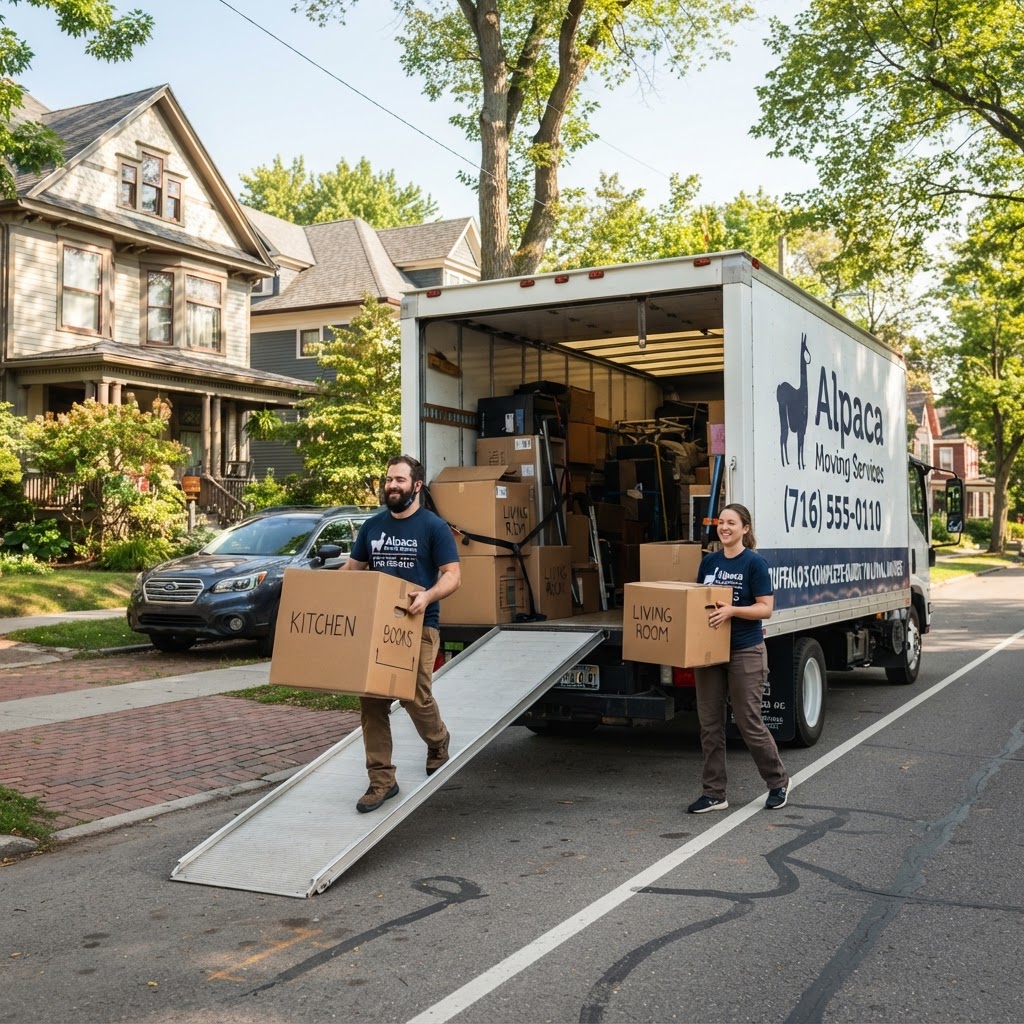
Alpaca Movers has you covered!
.avif)
.png)
Open 24 hrs