Movers Near Me Affordable: How Buffalo Residents Find Quality Help Without Overpaying



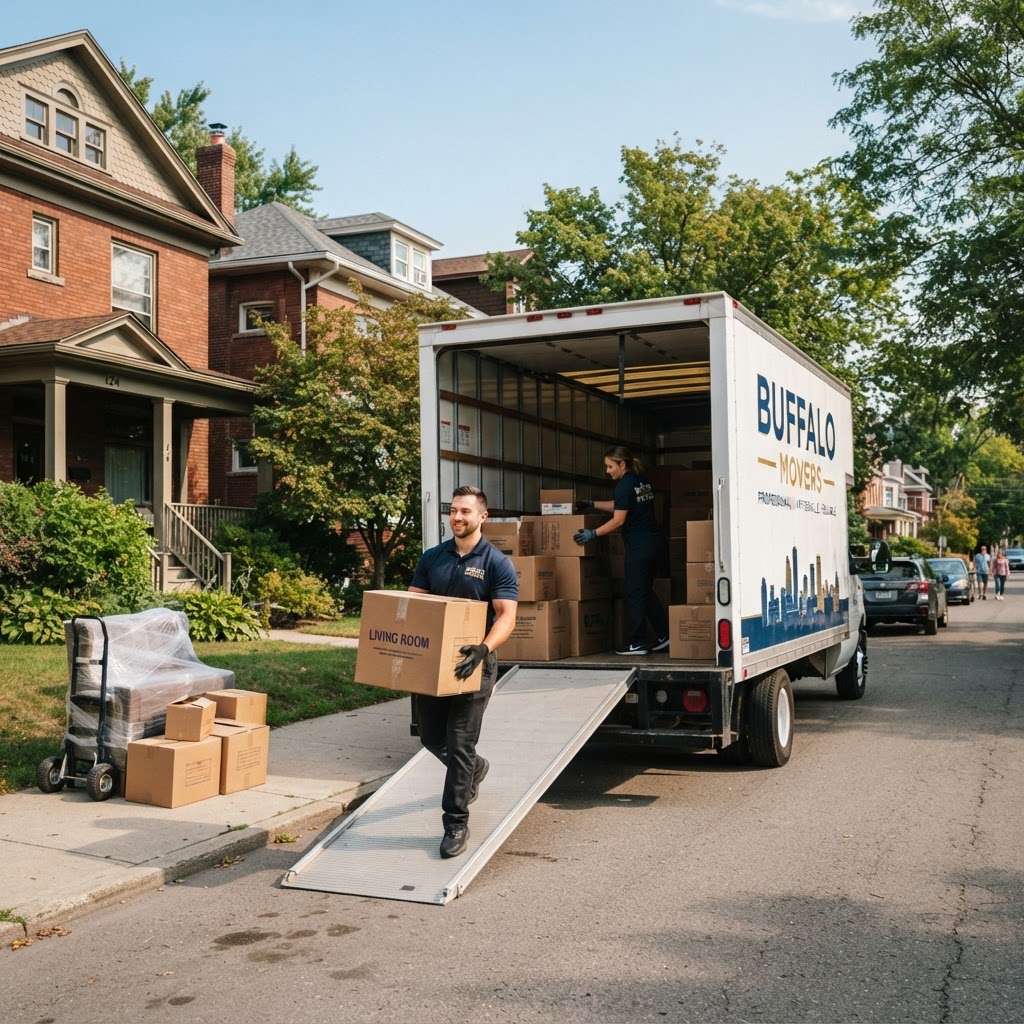
Movers Near Me Affordable: How Buffalo Residents Find Quality Help Without Overpaying
When you type "movers near me affordable" into Google from a Buffalo, NY address, you're immediately confronted with dozens of results, sponsored listings, and review aggregators all competing for your attention. The challenge isn't finding a mover — it's finding one that won't charge you $1,800 for a two-bedroom apartment move across the city or mysteriously add fuel surcharges to your final invoice. Buffalo residents have a distinct set of circumstances that shapes how moving costs shake out: aging housing stock with narrow staircases, brutal winter weather windows, and a cost of living that makes every dollar count. This guide breaks down exactly how to find affordable, quality moving help in Buffalo without getting burned.
What "Affordable" Actually Means in the Buffalo Moving Market
Affordable is a relative term, but in Buffalo's local moving market, there are concrete benchmarks you should know before you pick up the phone. According to data from Moving Authority and local moving company rate sheets, a local Buffalo move — defined as a move within Erie County or within 50 miles — typically costs between $350 and $950 for a one-bedroom apartment and $750 to $1,600 for a two-bedroom home, depending on the size of the crew, hours worked, and access conditions at both addresses.
The standard billing structure for most Buffalo movers is an hourly rate per crew member. In 2024, the going rate for a two-person crew in the Buffalo area runs between $90 and $130 per hour, with a typical two- to three-hour minimum. A three-person crew — which is recommended for anything above a one-bedroom — will run $130 to $175 per hour. Some companies, like Two Men and a Truck's Buffalo franchise or locally owned outfits like Ducky's Movers, offer flat-rate pricing for straightforward jobs. Flat-rate quotes eliminate the anxiety of watching the clock, and for moves with predictable logistics, they often come in cheaper than hourly billing.
What inflates costs beyond those baselines? Stairs are the single biggest factor in Buffalo. If you're moving out of a third-floor walkup in Allentown or a narrow Victorian in Elmwood Village, most movers will add a stair fee of $50 to $150 per flight on top of the base rate. Long carries — situations where the truck can't park within 75 feet of the entrance — also trigger add-on fees, typically $75 to $100 per instance. Packing services, if you need them, average $25 to $35 per box when labor and materials are combined, which can add several hundred dollars to a full-household move.
Understanding these line items before you request a quote means you can compare apples to apples when multiple companies send you estimates, and you'll know immediately if a company is padding its invoice.
How to Search, Vet, and Compare Buffalo Movers the Right Way
The search itself is straightforward — "movers near me affordable Buffalo NY" on Google, Bing, or Yelp will surface the primary players. But the real work starts after you have a list of names. Here is a step-by-step process that Buffalo residents have used to consistently land quality movers at fair prices.
Step 1: Verify licensing before anything else. In New York State, any moving company operating within the state must be registered with the New York State Department of Transportation and carry a valid USDOT number for interstate moves. You can verify a company's registration at the FMCSA's online lookup tool at safer.fmcsa.dot.gov. If a company can't provide a USDOT or NYSDOT registration number when you ask, stop the conversation there. This takes about three minutes and eliminates fly-by-night operators immediately.
Step 2: Request at least three in-home or video estimates. Phone quotes are nearly worthless because the mover hasn't seen your furniture, your staircase, or your parking situation. Reputable Buffalo companies — including All My Sons Moving & Storage, which operates a location serving the Buffalo metro, and local independents like Falconer Moving — will offer a free in-home or video walkthrough estimate. During the walkthrough, point out everything: the sectional sofa that needs to be disassembled, the upright piano in the living room, the shed in the backyard. Any item you don't mention becomes a potential surprise charge on moving day.
Step 3: Ask specifically about the binding estimate option. New York State law allows movers to offer binding estimates, which cap your cost at the quoted amount regardless of how long the job takes. Not every company advertises this, but most will agree to it if you ask. A binding estimate gives you cost certainty and is especially valuable for larger moves where hourly billing could spiral.
Step 4: Cross-reference reviews on multiple platforms. Google reviews, Yelp, and the Better Business Bureau all tell different parts of the story. The BBB's Buffalo office (bbb.org/buffalo) maintains complaint histories for local movers, which is more revealing than star ratings alone. Look specifically for complaints about final invoices being higher than quoted, damaged furniture claims that went unresolved, and no-shows on moving day — these three categories represent the most common Buffalo mover complaints.
Step 5: Time your move strategically. Moving costs in Buffalo follow predictable seasonal patterns. The peak season runs from mid-May through August, when demand is highest and rates reflect it. If you can schedule your move between October and March, you'll often find movers willing to negotiate 10 to 20 percent off standard rates just to fill their schedule. Mid-week moves — Tuesday through Thursday — are also cheaper than weekend moves by a similar margin. A two-bedroom move that costs $950 on a Saturday in July might run $700 on a Wednesday in November. That $250 difference is real money.
Step 6: Ask about crew continuity. Some larger moving franchises staff moves with day laborers or subcontractors whose experience level varies widely. Ask directly: "Will the crew that shows up be your full-time employees?" Companies that use consistent, trained crews — a standard practice at well-run independents — tend to work faster and handle furniture more carefully, which saves you money on hourly jobs and reduces the likelihood of damage claims.
Real-World Scenario: A South Buffalo Two-Bedroom Move
To make these numbers concrete, consider a scenario that mirrors hundreds of Buffalo moves every year. A family is relocating from a second-floor apartment on Abbott Road in South Buffalo to a single-family home in Cheektowaga — a roughly 8-mile move. The apartment has a standard staircase, they have approximately 20 medium boxes already packed, and their furniture includes a queen bed, a dresser, a couch, a dining set, and standard kitchen appliances (no washer/dryer).
After getting three estimates, they receive the following quotes:
- Company A (franchise, hourly): $145/hour for a three-person crew, two-hour minimum, plus a $75 stair fee. Estimated total: $435 to $580 depending on time.
- Company B (local independent, flat-rate): $620 flat, all-inclusive, binding estimate.
- Company C (hourly, two-person crew): $115/hour, no stair fee, three-hour minimum. Estimated total: $345 to $460.
On the surface, Company C looks cheapest. But a two-person crew on a two-bedroom move typically adds 45 to 60 minutes compared to a three-person crew. Factor in the additional hour at $115, and the actual cost lands closer to $500 — without the protection of a flat rate. Company B's $620 flat-rate binding estimate ends up being the most predictable and, for a family on a tight budget, the most defensible choice. This kind of analysis — looking past the hourly rate to the realistic total — is exactly what separates informed Buffalo movers from people who end up with $200 in unexpected charges on moving day.
FAQ
What is the cheapest time to hire movers in Buffalo?
Weekdays between October and March offer the lowest rates. You can typically save 15 to 25 percent compared to peak summer weekend pricing by scheduling during the off-season.
How much should I tip Buffalo movers?
The standard tip is $20 to $50 per mover for a local move, given in cash at the end of the job. For a particularly difficult move involving stairs or heavy specialty items, $50 per mover is appropriate.
Are there affordable movers in Buffalo that also offer packing services?
Yes. Several local companies, including Ducky's Movers and All My Sons, offer partial packing services where they pack only fragile or high-value items. This hybrid approach typically costs $150 to $300 and reduces the risk of breakage without the full packing service price tag.
What should I do if a mover damages my furniture?
Document the damage with photos immediately and file a written claim with the company within the timeframe specified in your contract — usually 30 to 60 days. New York State requires movers to carry cargo liability coverage. If the company is unresponsive, file a complaint with the NYSDOT and the BBB's Buffalo office.
---
Looking for more guidance on your Buffalo move? See our related guides on how to choose a Buffalo moving company and average moving costs in Western New York for additional tools and comparisons.
Alpaca Movers has you covered!
.avif)
.png)
Open 24 hrs