Moving Company Near Me Local: Your Complete Buffalo Moving Guide from Alpaca Moving Services



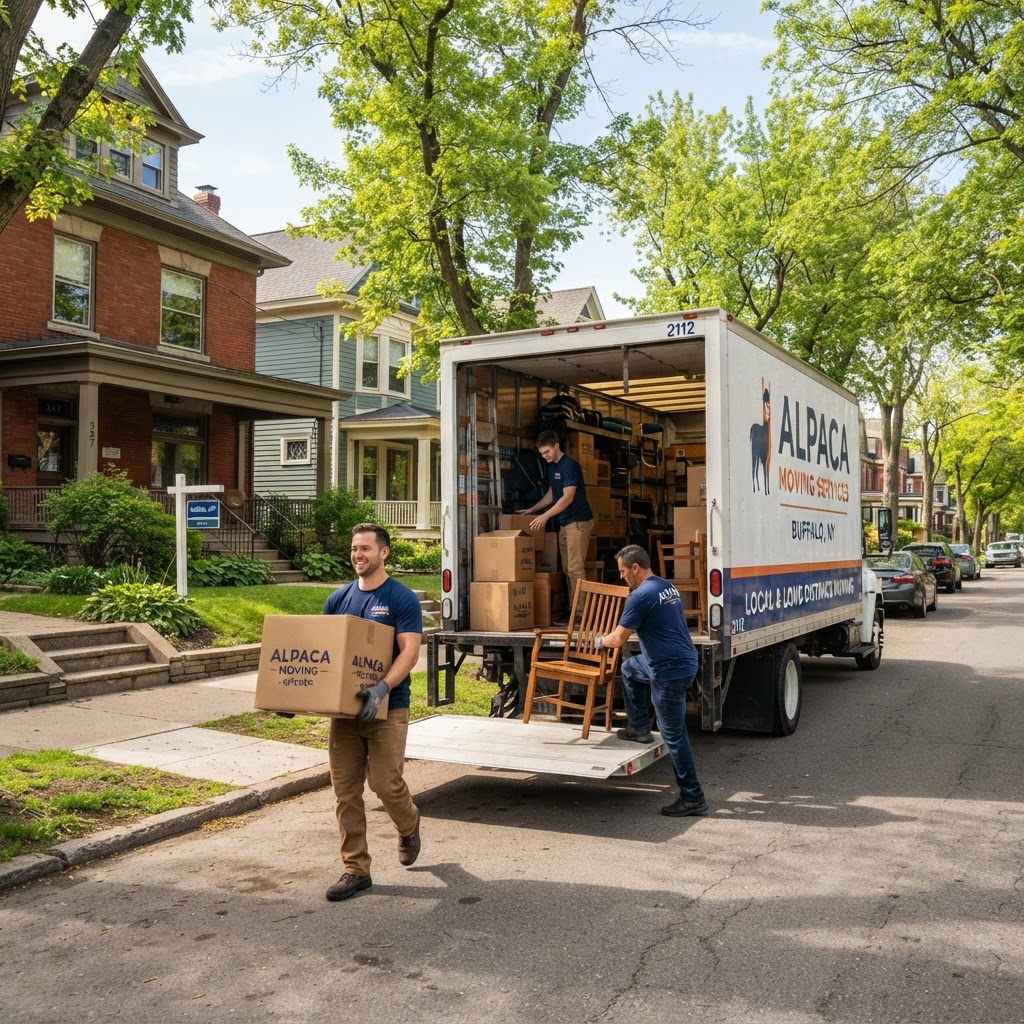
Moving Company Near Me Local: Your Complete Buffalo Moving Guide from Alpaca Moving Services
When you search for a "moving company near me local" in Buffalo, NY, you want more than a list of names — you want real answers about cost, timing, and what actually separates a smooth move from a stressful one. Buffalo's Western New York geography, aging housing stock, lake-effect weather, and dense urban neighborhoods all create unique moving challenges that only a truly local company understands. Alpaca Moving Services Inc. has operated in the Buffalo metro area for years, and this guide distills everything we've learned into one comprehensive resource. Whether you're relocating from Elmwood Village to South Buffalo or moving your office downtown, local expertise makes a measurable difference.
Buffalo is a city of distinct neighborhoods, each with its own logistical personality. Streets in Allentown and the West Side are often narrow, lined with 100-year-old homes that have steep staircases, tight doorways, and limited parking. A typical Allentown row house, for example, may have a staircase width of just 32 to 36 inches — barely enough to navigate a standard queen-size box spring without disassembly. Front porches with ornate woodwork, original hardwood floors susceptible to dolly damage, and basement entryways that slope at awkward angles are architectural realities that catch inexperienced movers off guard. Meanwhile, suburban areas like Amherst, Cheektowaga, and Williamsville present their own challenges: longer drives between origin and destination, HOA regulations that may restrict move-in hours to between 9 a.m. and 5 p.m., and newer construction with heavier furniture configurations including oversized sectionals, California king beds, and treadmills that won't fit through standard doorframes without careful maneuvering.
A local mover who knows which streets require parking permits — for example, securing a temporary no-parking zone on Elmwood Avenue can require submitting a request to the City of Buffalo's Department of Public Works at least five business days in advance — isn't just convenient, they're essential. Choosing a company that treats Buffalo as a generic city rather than a specific community will cost you time, money, and headaches.
This guide covers everything from pricing and seasonal timing to Buffalo-specific regulations and the questions you should ask before signing any moving contract. We've structured it so you can jump directly to the section most relevant to your situation, whether you're a renter in an apartment building, a homeowner with a piano and antique furniture, or a small business owner planning a commercial relocation.
What Does a Local Buffalo Move Actually Cost — and What Drives the Price?
Understanding moving costs in Buffalo requires looking beyond a single hourly rate. Most local moves in the Buffalo metro area are priced hourly, with rates typically ranging from $100 to $180 per hour for a two-person crew and a 16- to 26-foot truck. A three-person crew — which is strongly recommended for homes larger than 1,500 square feet or any property with more than one floor — generally runs $140 to $220 per hour. Most reputable companies, including Alpaca Moving Services, charge a two- to three-hour minimum, meaning even a small studio apartment move will likely cost between $300 and $500 before any add-ons.
What actually drives your final bill? Distance is one factor, but in Buffalo's compact geography, most local moves stay within a 20- to 30-mile radius, so drive time rarely adds more than 30 to 60 minutes to the job. The real cost variables are access and inventory. A second-floor apartment on Hertel Avenue with no elevator adds an estimated 20 to 30 percent more time than a single-story home. A piano — even an upright spinet — requires specialized equipment and at least two trained movers, adding $150 to $300 to a standard move. Antique furniture, artwork, and large mirrors should be packed with custom crating materials, which typically cost $50 to $150 per item depending on size.
For a practical example: a two-bedroom apartment move within Buffalo city limits, covering roughly 800 square feet of belongings, one flight of stairs at the origin, and ground-floor access at the destination, typically takes four to six hours with a two-person crew. At $140 per hour, that's $560 to $840 for labor alone. Add packing materials — boxes, tape, bubble wrap, mattress bags — and you're realistically looking at $700 to $1,100 all-in for a straightforward move. A three-bedroom suburban home in Amherst or Lancaster with a full basement and two flights of stairs could run $1,400 to $2,200 with a three-person crew over seven to nine hours.
Always request a written binding estimate rather than a non-binding quote. Under New York State law, movers are required to provide written estimates, and any company that declines to do so in writing is a red flag. Tools like the FMCSA's mover search database at protectyourmove.gov can help you verify a company's licensing and complaint history before you commit.
Timing Your Buffalo Move: Seasons, Schedules, and the Lake-Effect Factor
Buffalo's climate is not just a talking point — it is a logistical variable that directly affects your moving timeline, cost, and stress level. The city averages 94 inches of snowfall per year, making it one of the snowiest metropolitan areas in the United States. Lake-effect snow events, which can drop 12 to 24 inches in under 48 hours in southern Erie County and parts of the Southtowns, have grounded moving crews, blocked driveways, and forced last-minute reschedules more times than any local mover can count.
If you have flexibility, the ideal moving window in Buffalo is late April through early October. Demand is highest between June 1 and August 31, when leases turn over and families relocate before the school year. During peak season, reputable moving companies book two to four weeks in advance for weekends and one to two weeks out for weekday slots. If you're planning a June or July move, contact movers no later than May to secure your preferred date. Waiting until the week before your move during peak season means accepting whatever crew and truck availability remains — often the least experienced teams and the highest rates.
Off-season moves — November through March — can save you 10 to 20 percent on hourly rates simply because demand drops sharply. However, you must budget time and planning for weather contingencies. A best practice is to build a one-day weather buffer into your moving schedule and confirm with your mover 48 hours before the move date after checking the National Weather Service forecast for the Buffalo Niagara region at weather.gov/buf. Ask your mover explicitly about their weather cancellation and rescheduling policy before signing a contract.
For renters in Buffalo apartment buildings — particularly the large complexes along Main Street, Delaware Avenue, and in the University Heights district — many property managers require you to reserve the building's freight elevator 72 hours in advance. Some buildings, especially newer mixed-use developments in the Canalside and Elmwood Village corridors, restrict move-ins to specific hours and require a refundable damage deposit of $200 to $500 paid to building management before the crew arrives. Confirm these requirements with your building manager at least one week out to avoid day-of delays.
Questions to Ask Before Signing Any Moving Contract in Buffalo
Signing a moving contract without asking the right questions is one of the most common and costly mistakes Buffalo residents make. Here is a step-by-step checklist to work through with any mover you are seriously considering:
Step 1: Verify licensing and insurance. In New York State, intrastate movers must be registered with the New York State Department of Transportation. Ask for the company's NYSDOT number and verify it at the NYSDOT carrier search portal. Request a certificate of insurance showing general liability coverage of at least $1 million and workers' compensation coverage for all employees. An uninsured worker injured in your home during a move can create legal liability for you as the homeowner or tenant.
Step 2: Understand valuation coverage. Standard moving contracts in New York include Released Value Protection at no additional charge, which covers damaged items at just $0.60 per pound. A 50-pound flat-screen television damaged beyond repair would yield a $30 reimbursement under this coverage. Full Value Protection, which covers repair or replacement at current market value, typically costs 1 to 2 percent of the declared value of your shipment. For a move involving $20,000 worth of belongings, that's $200 to $400 for meaningful coverage — almost always worth it.
Step 3: Ask about subcontracting. Some moving companies book jobs and then hand them off to independent day laborers or subcontracted crews. Ask directly: "Will Alpaca Moving Services employees be performing my move, or will any part of the job be subcontracted?" A reputable company will answer clearly and put the answer in writing.
Step 4: Confirm the truck size. Sending a 16-foot truck to a three-bedroom home almost always means a second trip, which adds one to two hours and proportional labor cost to your bill. Ask your mover to confirm the truck size they are allocating based on your inventory and push back if it seems undersized.
Step 5: Get itemized pricing in writing. Your contract should specify the hourly rate, the number of movers, the truck size, travel time charges, stair fees, long-carry fees (typically applied when the truck must park more than 75 feet from your door), and the policy on packing materials. Surprise line items on moving day are a sign of a disreputable company.
---
Frequently Asked Questions
How far in advance should I book a moving company in Buffalo?
For peak season moves between June and August, book four to six weeks in advance. For fall and spring moves, two to three weeks is typically sufficient. Winter moves can often be booked one week out, though weather flexibility is important.
Do Buffalo movers charge extra for stairs?
Many do. A common stair fee is $25 to $75 per flight per trip, though some companies build stair time into their hourly rate. Always confirm this in writing before your move date.
Is it cheaper to move on a weekday in Buffalo?
Yes, in most cases. Weekday moves — particularly Tuesday through Thursday — are 10 to 15 percent less expensive than Saturday moves at many local companies simply due to lower demand.
What neighborhoods in Buffalo are hardest to move in and out of?
Allentown, the West Side, and parts of the Fruit Belt consistently present the most logistical challenges due to narrow streets, limited parking, older building stock, and tight interior layouts. These neighborhoods require an experienced local crew.
Does Alpaca Moving Services offer packing services?
Yes. Full-service packing, where the crew packs your entire home before moving day, is available and typically adds $200 to $600 to the total cost depending on home size and volume of fragile items.
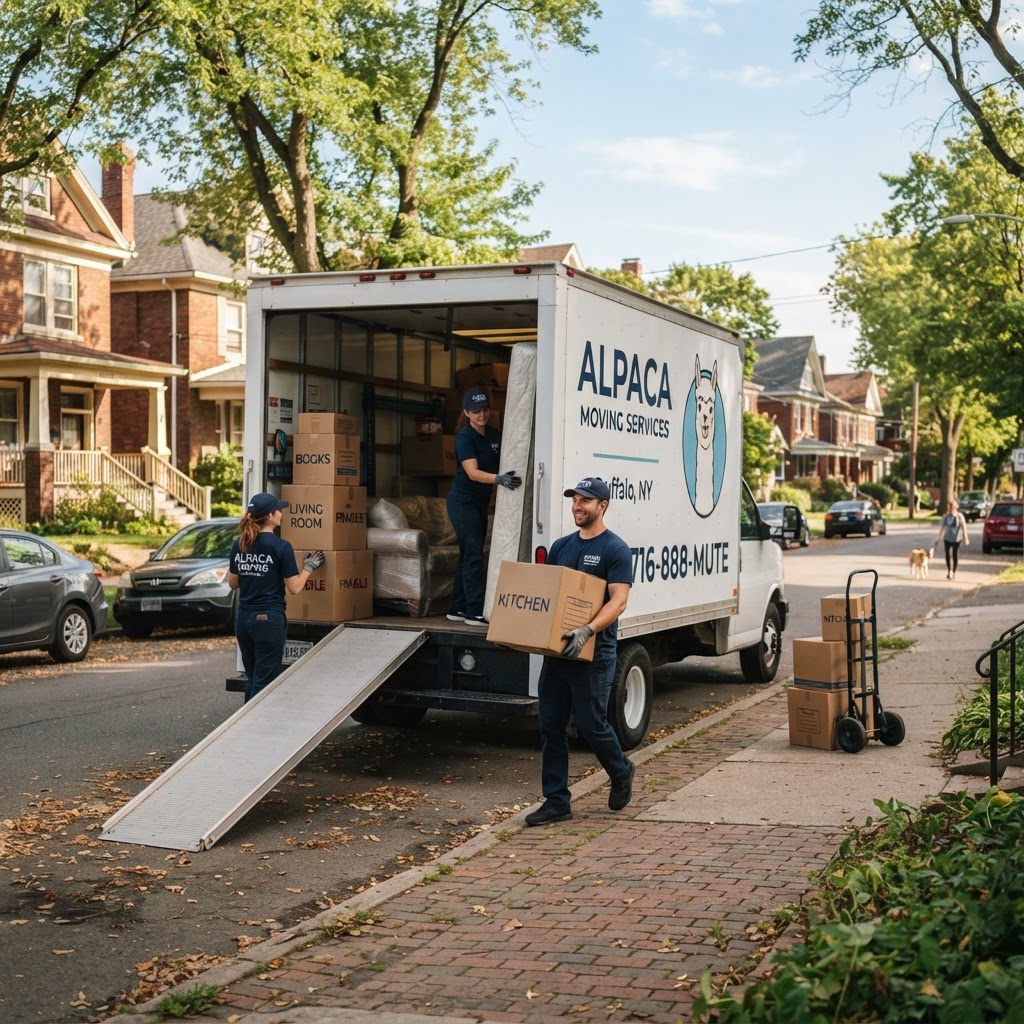
Alpaca Movers has you covered!
.avif)
.png)
Open 24 hrs