How to Get Rid of a Bed Frame When You're Moving Out



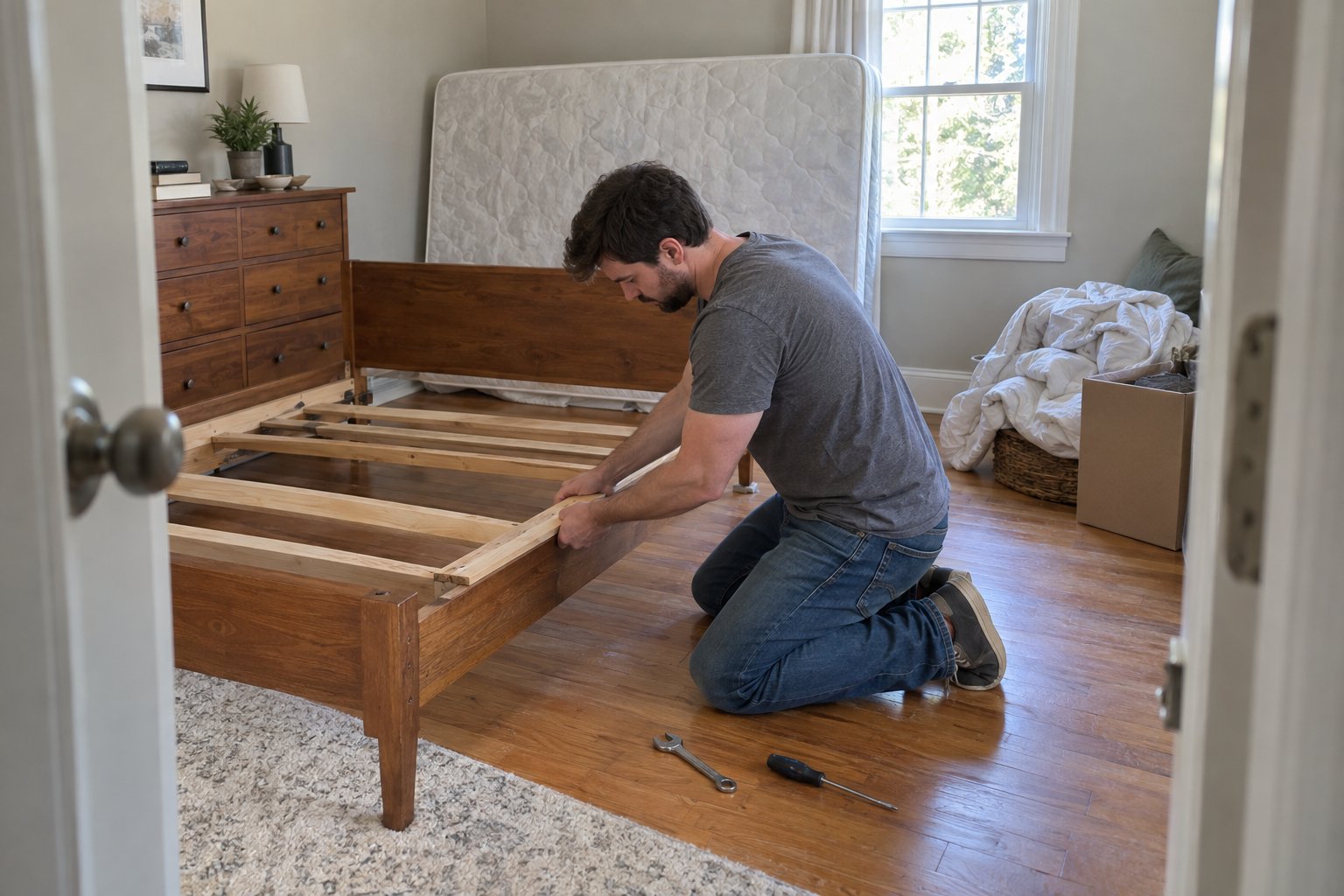
Getting rid of a bed frame comes down to picking the right method for its condition: donate it if it's still sturdy, sell it if it has resale value, recycle the metal or wood parts if it's falling apart, or schedule a bulk trash pickup if nothing else works. What you should not do is leave it curbside without checking your city's rules first, since most municipalities (including Buffalo) have specific requirements for bulky item pickup.
A bed frame is one of the most common items people try to offload right before a move, usually because the new place has a different bed size, a built-in frame, or just because hauling a bulky metal or wood frame across town costs more in truck space than the frame is worth. Here's how to deal with it without it becoming a last-minute headache on moving day.
Can You Throw Away a Bed Frame With Regular Trash?
Usually not as-is. Most curbside trash programs classify bed frames as bulk or large-item waste, which means they need to be scheduled separately from your regular weekly pickup, and some municipalities charge a fee or cap the number of bulk items per month.
Before you drag a frame to the curb, check your city or town's sanitation website for bulk pickup rules. Wood frames may need to be broken down into pieces under a certain length. Metal frames sometimes need to go to a scrap metal recycler instead of the regular waste stream, since many haulers won't take large metal items at all. If you're unsure, a quick call to your local public works department will clear it up faster than guessing.
Breaking Down a Frame for Disposal
Most bed frames disassemble with a screwdriver or Allen wrench, the same tools you'd use to take it apart for a move. Separate wood slats, metal rails, and any wheels or glides. Breaking it into smaller, flatter pieces makes it easier for haulers to take and easier for you to fit in a vehicle if you're dropping it off yourself.
Who Removes Leftover Moving Junk Like Old Bed Frames?
If you'd rather not deal with disposal logistics at all, a junk removal service will pick up the frame directly, often alongside other items you're not bringing to the new place. This is usually the fastest option when you're short on time before closing or handoff day.
Your options generally fall into a few categories:
- Local junk removal companies: They haul away furniture for a fee and often sort items for donation or recycling on your behalf.
- Municipal bulk pickup: Scheduled through your city, usually with advance notice required and sometimes a sticker or tag purchase.
- Scrap metal recyclers: A good fit for metal frames, and some will pick up larger items for free since the metal has resale value to them.
- Your moving company: Some movers offer light junk removal or will help load unwanted items for drop-off as part of the move itself, which can save you a separate trip.
Should You Donate or Sell Your Old Bed Frame Instead?
If the frame is in decent, usable condition, donating or selling it is almost always worth trying first. It keeps a functional piece of furniture out of a landfill and can offset some of your moving costs if you sell it.
Local donation centers, shelters, and reuse organizations frequently accept bed frames, though many have restrictions on mattresses due to hygiene and bed bug concerns, so check their current policy before loading up your vehicle. Platforms where people list furniture for free local pickup are another easy route, especially for frames that are heavy or awkward to transport; letting the buyer handle pickup saves you the hauling. If the frame is a solid wood piece or a recognizable brand, a resale marketplace listing with a few clear photos can move quickly, particularly in the weeks before a popular moving season when people are furnishing new places.
What to Do If It's Damaged or Outdated
A frame with broken slats, rust, wobbly joints, or a style you're embarrassed to photograph for resale is better recycled than donated. Most donation centers will turn away frames that need repair, and passing along a broken item just shifts the disposal problem to someone else. Scrap it, recycle the materials, or include it in a bulk junk pickup instead.
Is It Better to Get Rid of a Bed Frame Before or After the Move?
Before, in almost every case. Moving a bed frame you don't plan to keep means paying to transport weight and bulk you're going to dispose of anyway, and it takes up truck space that could go toward items you're actually keeping.
The exception is a tight closing timeline where you genuinely don't have a window to arrange donation pickup or bulk collection before the move date. In that situation, it may make more sense to bring the frame along and deal with disposal at the new address, especially if your new city has easier bulk pickup rules than your old one. If you're weighing which furniture is worth moving at all versus replacing, our guide on what to do with old furniture when you move walks through that decision in more detail.
Timing Disposal Around Your Moving Day
Aim to have the frame gone at least two to three days before your move, not the morning of. Donation centers and junk haulers often need advance scheduling, and bulk trash pickup in particular can run on a weekly or biweekly cycle rather than on demand.
If your move involves a professional packing services team, let them know ahead of time that the bed frame is staying behind so it doesn't get wrapped and loaded by mistake. And if you're also sorting through other furniture you don't plan to keep, it's worth doing that full pass at the same time rather than handling disposal item by item as moving day approaches.
Frequently Asked Questions
Final Thoughts
A bed frame you're not bringing to your new home doesn't need to turn into a last-minute scramble. Check your condition first: usable frames go to donation or resale, damaged ones go to recycling or bulk pickup, and anything you're unsure about is worth a quick call to your local sanitation department or a junk hauler before move week arrives. Clearing it out ahead of time frees up truck space for the things you actually want moved, and if you'd rather have professionals handle the move itself while you deal with what stays behind, our team at Alpaca Movers is happy to help you plan the logistics around it.
Frequently Asked Questions
Can you leave a bed frame on the curb for garbage pickup?
Not usually without scheduling it first. Most cities classify bed frames as bulk waste, which requires a separate pickup request, and some charge a fee or limit how many bulk items you can set out per month. Check your local sanitation department's rules before putting it out.
Do donation centers accept old bed frames?
Many do, as long as the frame is sturdy and in working condition, though policies vary and some locations are stricter about accepting bedroom furniture due to past issues with damaged or infested pieces. Call ahead to confirm before you load it up.
What's the best way to get rid of a metal bed frame specifically?
Scrap metal recyclers are often the easiest option for metal frames, and some will collect larger items for free or a small fee since the metal itself has resale value. This also keeps it out of the regular trash stream, where many haulers won't accept bulky metal pieces anyway.
Will movers take away my old bed frame if I'm not keeping it?
Some moving companies offer limited junk removal or will help load unwanted furniture for drop-off as part of your move, but this varies by company and isn't always included by default. Ask when you book so it can be planned into the day rather than negotiated on the spot.
How much notice do I need to schedule bulk item pickup for a bed frame?
It depends on your municipality, but many require several days to a week of advance notice, and some only run bulk collection on specific days each month. Scheduling it as soon as you know your move date helps avoid a last-minute conflict.



Alpaca Movers has you covered!
.avif)
.png)
Open 24 hrs