Mirror Moving Checklist: How to Protect Mirrors When Moving



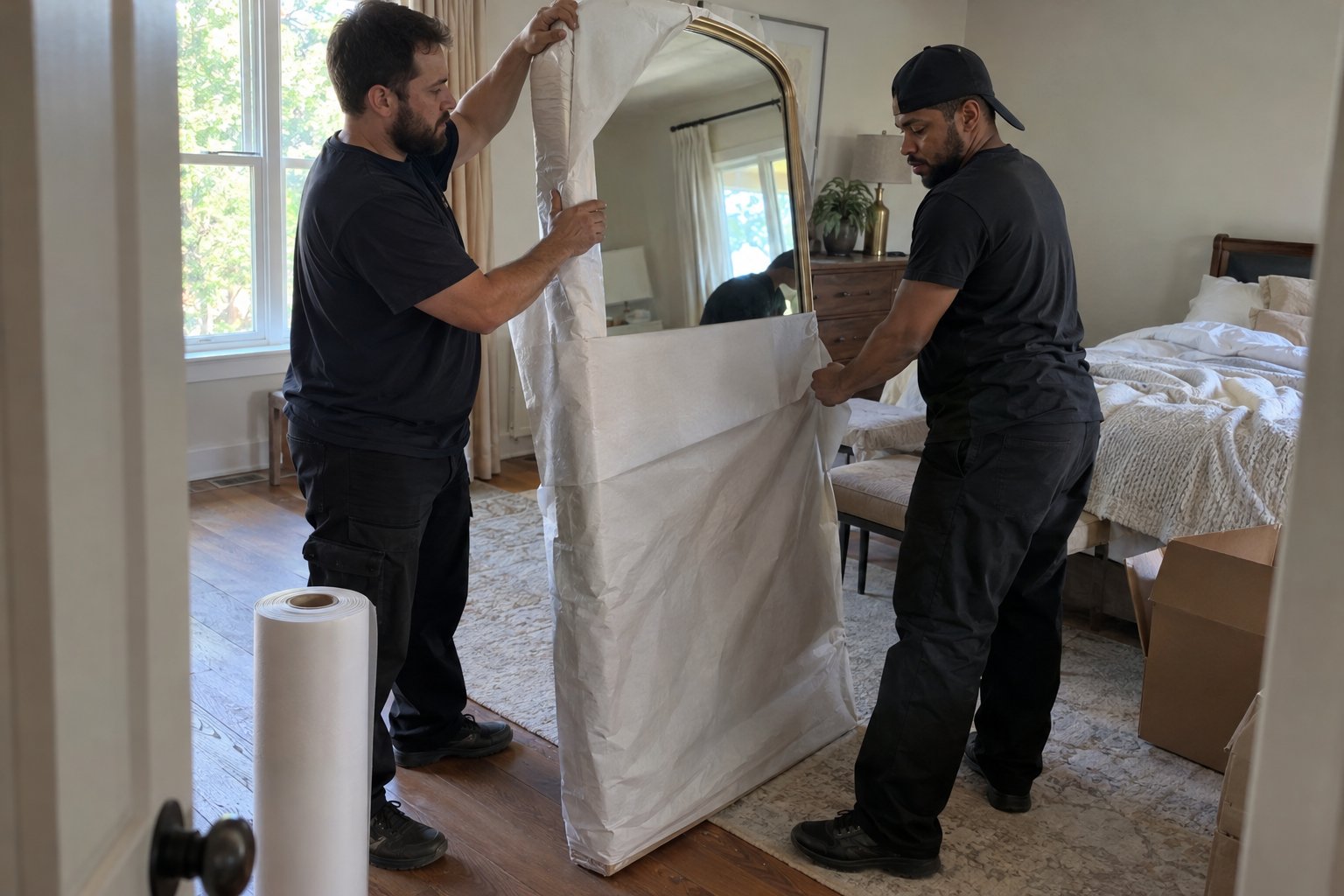
Protecting mirrors when moving comes down to three things: cushioning the glass itself, keeping the frame from flexing or cracking under pressure, and loading the mirror so nothing else can press against its face. Skip any one of those steps and even a short move can end in a shattered mirror or a scratched frame. Here is a checklist you can follow from the day you start packing through the moment the mirror comes off the truck.
Supplies Checklist: What You Need Before You Start
Gather your materials before you touch a single mirror. Having everything ready means you won't improvise with whatever is lying around, which is how mirrors end up under-protected.
- Mirror or picture moving boxes: These flat, adjustable cardboard boxes are built specifically for mirrors, framed art, and glass panels. They hold the mirror rigid so it can't shift or flex.
- Packing paper or glassine sheets: Used as a first layer directly on the glass to prevent scratches from the next layer of wrap.
- Bubble wrap: Provides the cushioning that absorbs bumps and vibration during transport.
- Painter's tape or masking tape: Applied in an X or grid pattern across the glass to hold shards in place if the mirror does break, protecting you from a dangerous mess.
- Corner protectors: Cardboard or foam corners that take the impact if a mirror is bumped or set down at an angle.
- Moving blankets: A second layer of padding for larger or more valuable mirrors, especially ones without a mirror box.
- A permanent marker: For labeling the box clearly on multiple sides.
How Do You Wrap a Mirror for Moving?
Wrapping a mirror properly means taping the glass first, cushioning it in paper and bubble wrap, then boxing it so the frame can't bend. Each layer protects against a different kind of damage, so don't skip one to save time.
Start by taping an X across the full face of the glass with painter's tape. This won't stop a break, but it keeps glass from scattering if the worst happens, and it adds a small amount of resistance against surface cracks. Next, lay a sheet of packing paper directly over the glass, followed by two or three layers of bubble wrap with the bubbles facing in toward the mirror. Wrap the frame's edges and corners separately, since corners take the brunt of any impact. Slide the wrapped mirror into a mirror box sized to fit it snugly. If it's too small to fit a mirror box, sandwich it between two sheets of cardboard cut to size and tape the cardboard together around the edges, then wrap the whole thing in a moving blanket.
Should You Pack Mirrors Flat or on Their Edge?
Mirrors should be transported standing on edge, not laid flat. A mirror lying flat has no support under its center, and the weight of anything stacked on top of it, or even its own weight over a long drive, can cause the glass to bow and crack.
Standing a mirror on its edge distributes pressure along the sturdiest part of the frame rather than across the unsupported middle of the glass. This is true whether it's riding in a moving box, a vehicle, or stored temporarily in a garage. If you're storing a mirror for any length of time before or after your move, keep it upright against a wall rather than resting flat on a shelf or the floor.
Loading Mirrors on the Truck Without Risking a Crack
Mirrors need to go in last and come out first, standing on edge, wedged against a soft surface, with nothing stacked against their face. Loading order matters as much as wrapping, since a well-wrapped mirror can still crack if it's crushed between furniture.
Place mirrors in a dedicated upright slot near the back of the load, ideally against a moving blanket draped over the truck's interior wall, never directly against bare metal or wood. Secure the mirror with a strap or wedge soft items like pillows or folded blankets around it so it can't tip or slide during transit. Nothing heavier should ever lean against the glass side. As a rule of thumb, treat a framed mirror the way you'd treat a piece of furniture with glass inserts: it rides alone, it doesn't get boxes stacked on it, and it's one of the last things loaded so it's one of the first things off.
Labeling and Handling Mirrors on Moving Day
Every mirror box needs "FRAGILE" and "GLASS, THIS SIDE UP" written on at least two sides, plus an arrow showing which way is up. Clear labeling means anyone handling the box, including you, knows to carry it upright and set it down carefully.
On moving day itself, set mirrors aside before the rest of the loading begins so they aren't accidentally buried under other boxes while you're focused on bigger furniture. Carry mirrors with both hands on the frame, not the glass, and always with the glass facing away from your body in case it's dropped. If you're moving more than one mirror, carry them one at a time rather than stacking them against each other, since even wrapped glass surfaces can grind against one another with foot traffic or a bumpy ride.
Mirrors are also one of the items where it helps to tell your crew about anything unusual ahead of time, whether that's an oversized wall mirror, an antique frame, or a mirror built into a dresser or armoire. A quick note about your home's layout, including tight stairwells or narrow doorways, helps the crew plan the safest path before moving day instead of figuring it out on the spot. This kind of preparation applies whether you're moving within Buffalo, NY or out to a nearby town.
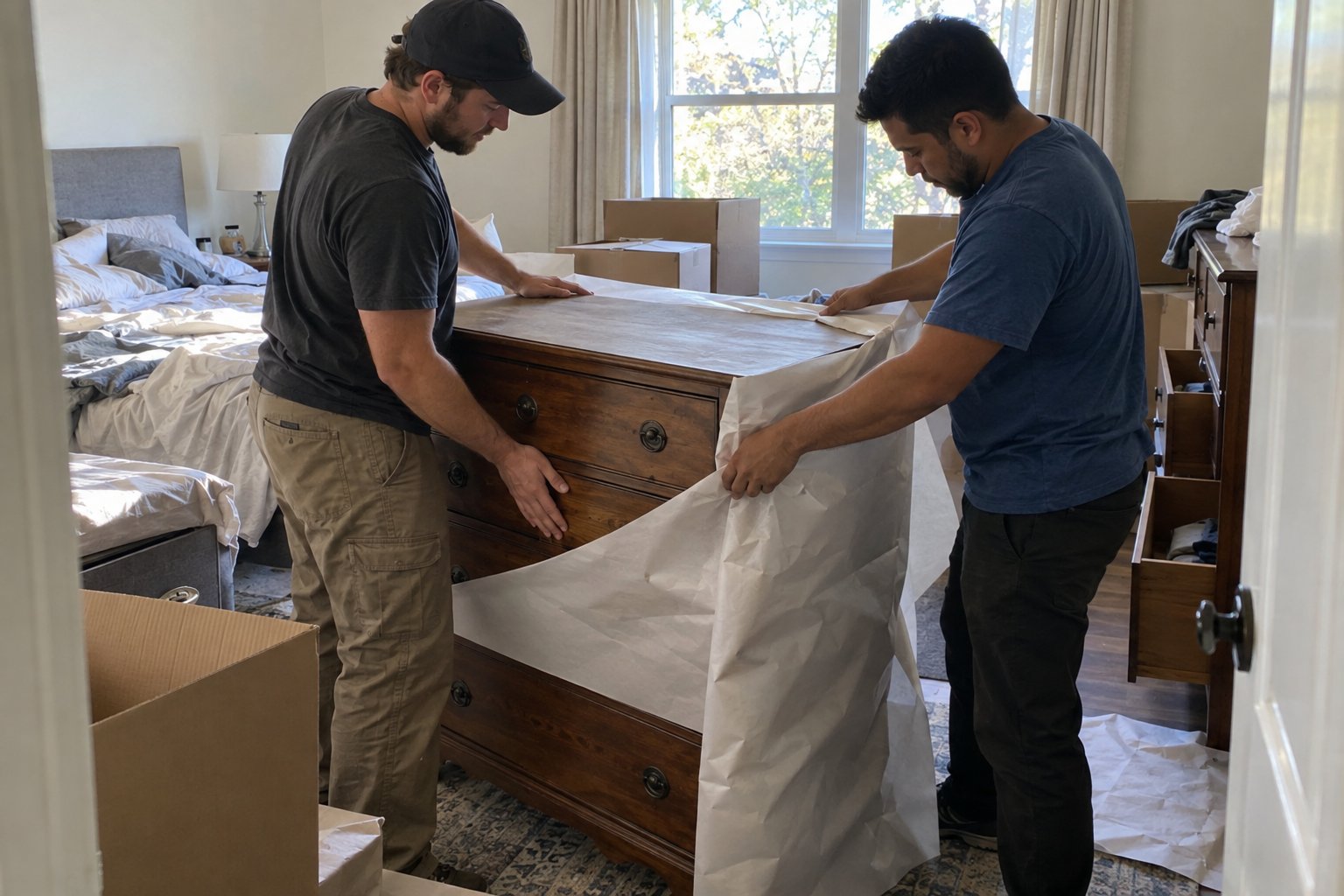
If you're not confident wrapping and loading mirrors yourself, this is one of the areas where professional packing services pay off, since a crew that packs fragile items daily will have mirror boxes and wrapping technique ready to go. For heavier framed mirrors or mirrored furniture that also needs careful handling on the day itself, pairing packing help with residential moving services covers both the prep and the lift.
Mirrors aren't the only fragile items that need this kind of attention. If you're also working through other breakables, our guide to moving fragile and sentimental items covers the broader approach to packing glass, china, and keepsakes you can't replace. And if your move includes a storage stop before the mirror reaches its new wall, our post on choosing the right storage option walks through how to keep fragile items safe while they wait.
Planning your move? Request a quote from Alpaca Moving Services.
Frequently Asked Questions
Do mirrors need a special box, or can I use a regular moving box?
A standard box won't hold a mirror rigid, and bending or flexing is what usually cracks the glass. Use an adjustable mirror or picture box, or build a cardboard sandwich around the mirror if a box isn't available, so the glass can't shift during transport.
How many mirrors can safely travel in the same box or space?
Pack and carry mirrors one at a time rather than stacking them against each other. Even well-wrapped glass surfaces can grind or shift against one another, so each mirror should have its own slot with padding on every side.
What's the best way to carry a large wall mirror down stairs or through a narrow hallway?
Carry it with both hands gripping the frame, never the glass, and keep the glass side facing away from your body. If the space is tight, tell your moving crew ahead of time so they can plan a path and decide whether the mirror needs to go through on an angle.
Should mirrors be loaded first or last on the truck?
Mirrors should go in last, standing on edge near the back of the load, so they're also the first items off at your new place. Loading them last also means they're not buried or pressed against by anything loaded afterward.
Is bubble wrap enough, or do I also need packing paper under it?
Use packing paper or glassine directly against the glass first, since bubble wrap alone can leave faint marks on some mirror finishes over a long drive. Add two or three layers of bubble wrap over the paper for cushioning, then box or blanket-wrap the whole mirror.
Alpaca Movers has you covered!


Open 24 hrs