How to Wrap a Couch for Storage (and Keep It Mold and Dust Free)



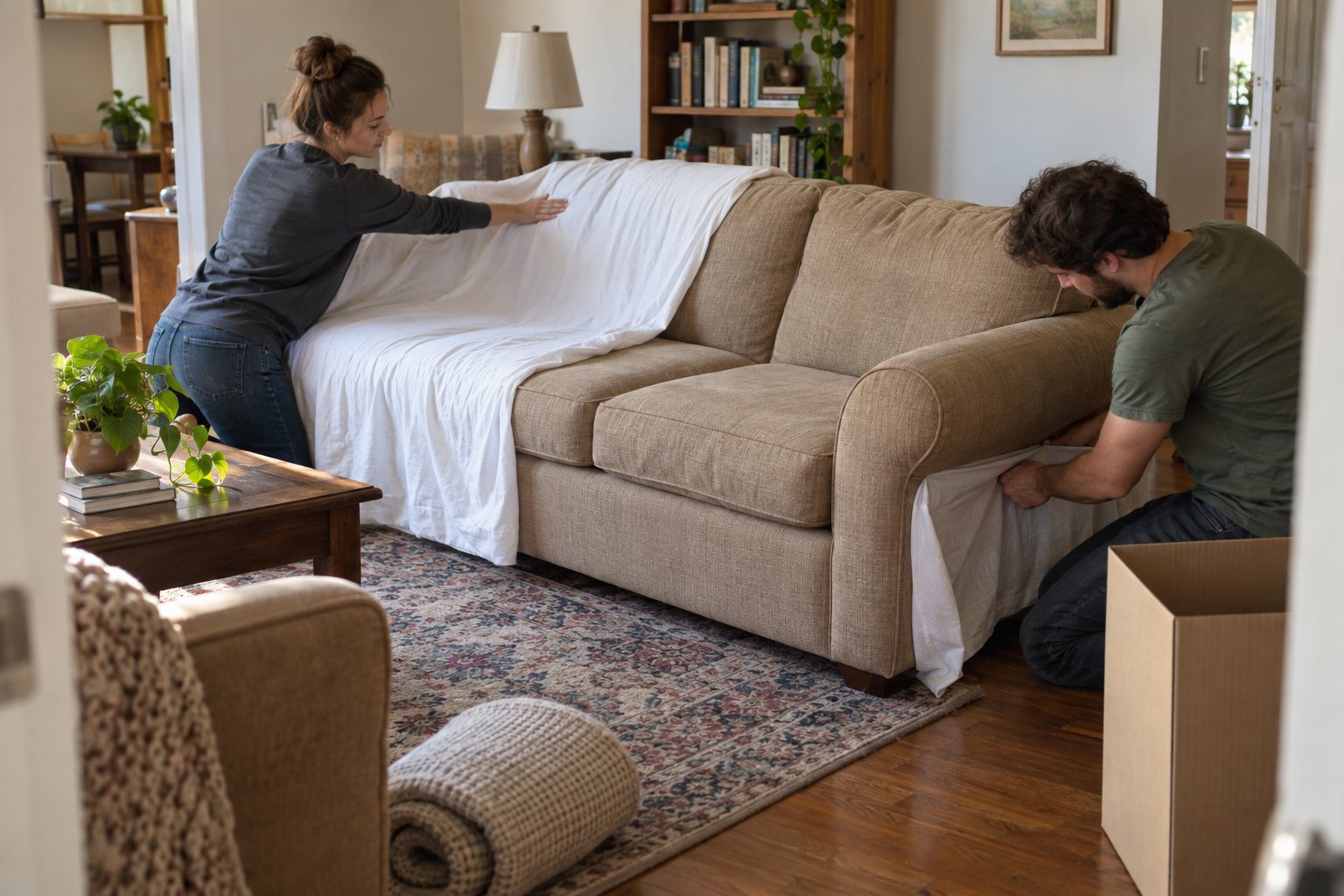
Wrapping a couch for storage means cleaning it thoroughly, letting it dry completely, then covering it in a breathable material like a cotton sheet or moving blanket rather than sealing it in plastic. Plastic traps moisture against the upholstery and invites mold, mildew, and musty odors, especially in a storage unit that isn't climate controlled. Get the layering right and your couch will come out of storage looking and smelling the same as the day it went in.
A couch is one of the bulkiest, most expensive pieces of furniture most people own, and it is also one of the easiest to ruin in storage if you skip a step. Fabric holds onto moisture and odors, cushions lose their shape when stacked wrong, and legs and frames take the brunt of damage when a couch gets jostled or leaned on by other boxes. Here's how to do it properly, whether you're storing it for a month during a move or for a longer stretch.
What's the Best Way to Protect a Couch for Long-Term Storage?
The best protection combines a clean, dry couch, removable parts stored separately, and a breathable outer layer that keeps dust off without sealing in humidity. Skipping any one of those three steps is usually what leads to mold, musty smells, or crushed cushions when the couch comes back out.
Start by vacuuming the entire surface, including underneath cushions and in the seams, to remove crumbs and debris that attract pests. Spot clean any stains with an upholstery cleaner appropriate for the fabric type, and let the couch air out for at least a full day before wrapping anything. Trapping even slightly damp fabric is the single biggest cause of mold complaints in long-term furniture storage.
Choosing the Right Cover Material
Cotton moving blankets or old bed sheets are ideal because they let air circulate while still blocking dust. If you use plastic at all, limit it to a loose outer layer over the blanket, and only for short-term transport, never as the sole covering for weeks or months in storage.
Should You Disassemble a Couch Before Storing It?
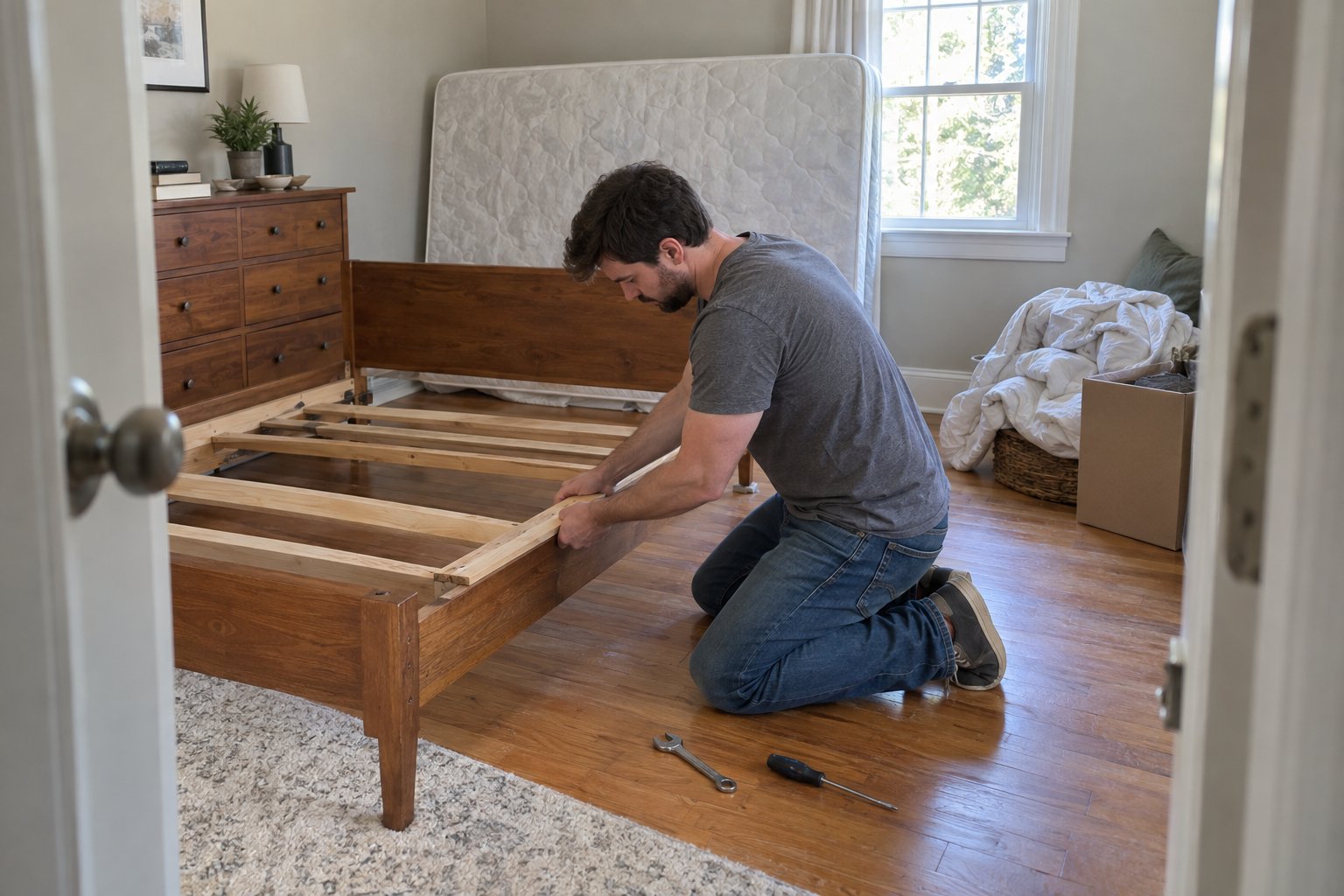
Yes, if the couch has removable legs, cushions, or a detachable chaise, taking those parts off before storage reduces strain on joints and makes the piece far easier to maneuver and stack safely. A couch stored fully assembled is more likely to develop loose joints or flattened spots from uneven weight distribution.
Remove and bag the hardware (screws, bolts, bracket pins) in a labeled zip-top bag taped to the underside of the frame so nothing gets lost. Stand cushions on their sides rather than stacking them flat for months, since prolonged flat stacking compresses the foam unevenly. If the couch has legs that unscrew, wrap each one individually in bubble wrap or cloth and store them inside a cushion cover or in a small box next to the couch.
How to Wrap a Couch for Storage Step by Step
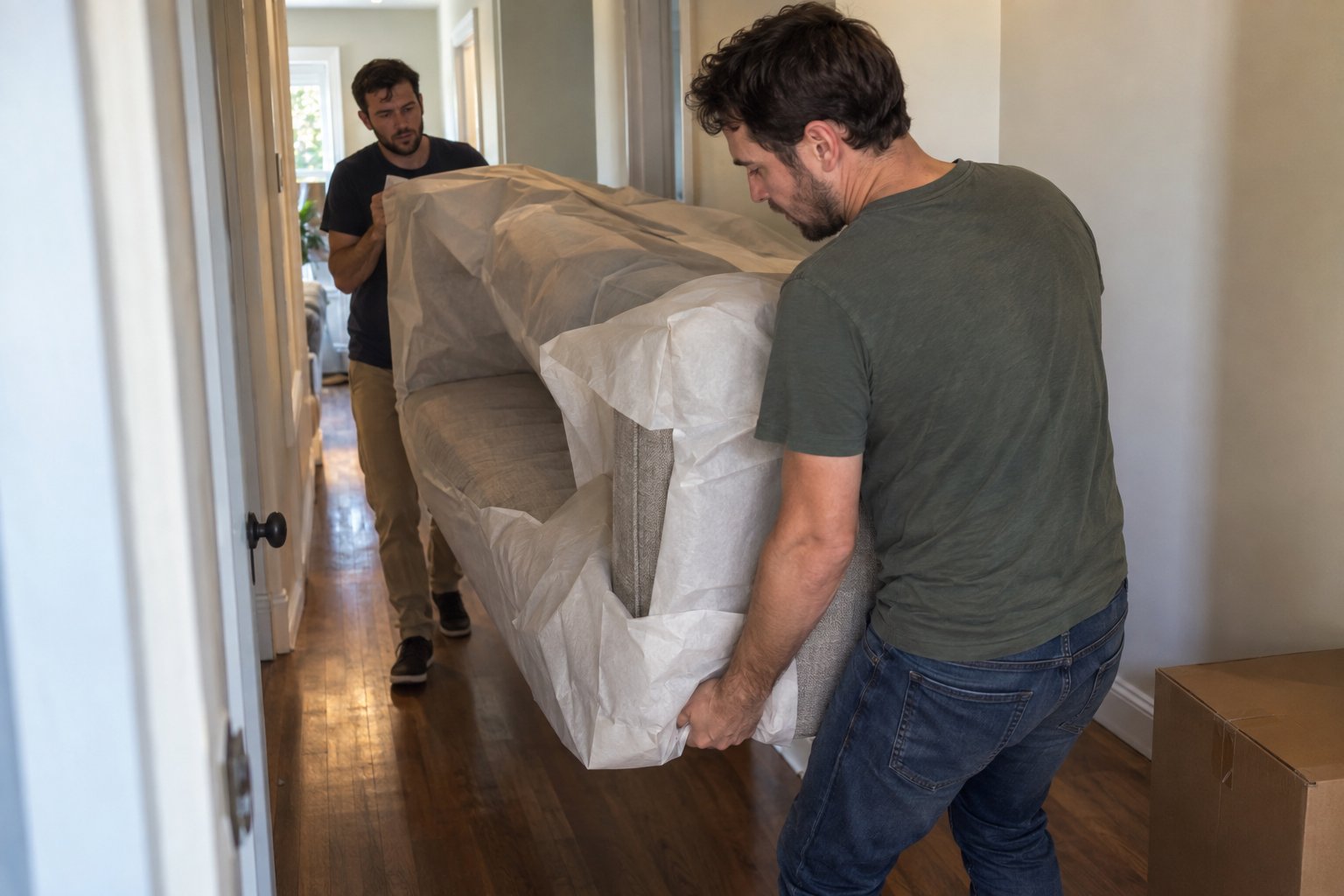
Once the couch is clean, dry, and disassembled where possible, wrap it in this order: a breathable blanket layer first, corner and edge padding second, and a loose protective outer cover last. This sequencing keeps the fabric breathing while still guarding the frame and legs from scuffs.
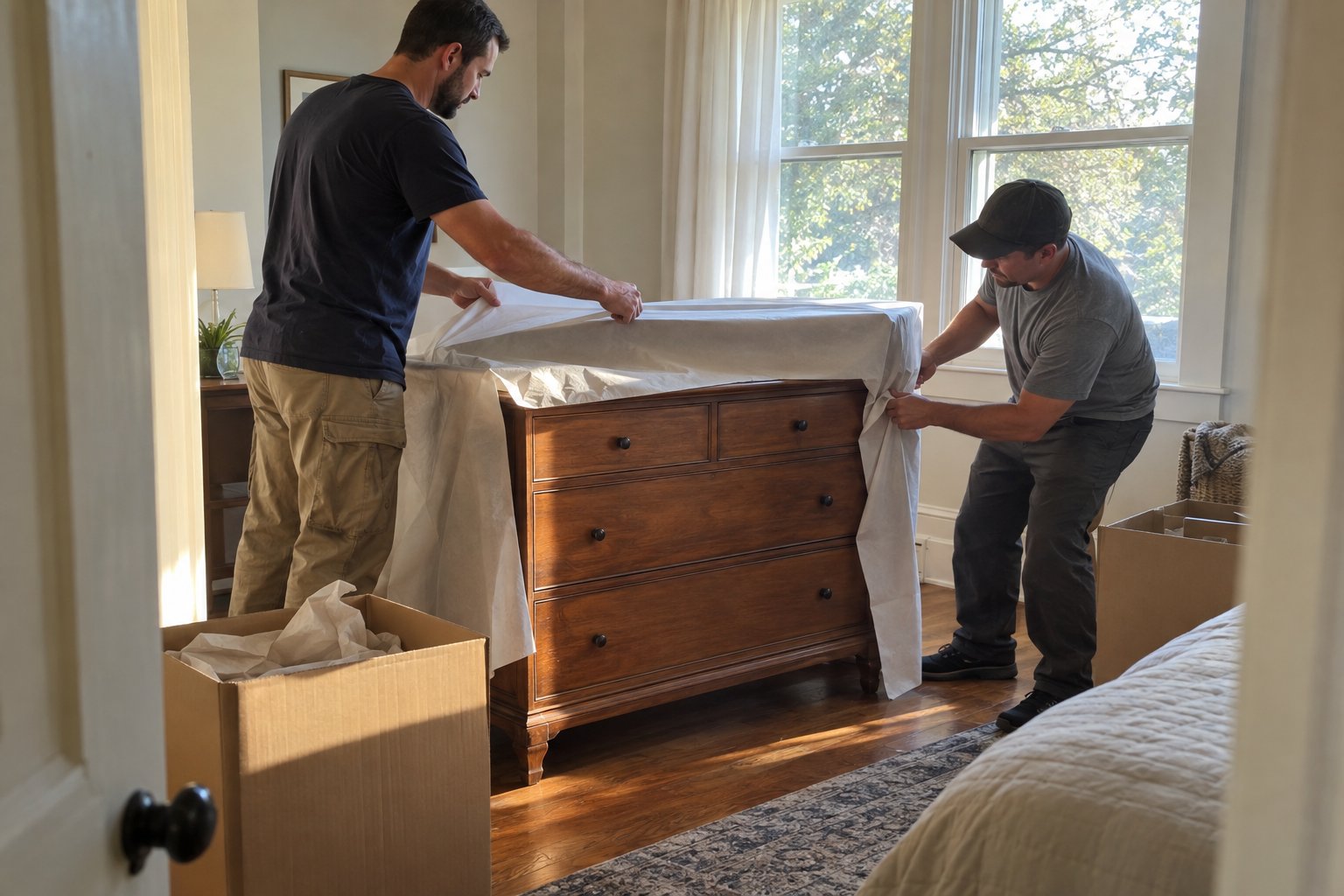
- Layer one: Drape a cotton moving blanket or clean sheet over the entire couch, tucking it around the arms and back.
- Layer two: Wrap exposed wood or metal legs and corners in bubble wrap, securing it with tape that touches only the wrap, never the furniture's finish.
- Layer three: If you want extra dust protection, add a loose-fitting furniture cover over the blanket, leaving the bottom edge open slightly for airflow.
- Secure, don't seal: Use packing straps or twine to hold the wrap in place loosely. Avoid shrink-wrapping the couch tightly, which recreates the same moisture trap as plastic.
Where and How Should a Wrapped Couch Sit in Storage?
A wrapped couch should sit upright on its legs (or on wood blocks if legs are removed) with at least a few inches of clearance from the walls and floor of the unit. Placing it directly against a concrete wall or floor increases the chance of moisture wicking up into the fabric, even with a cover on.
If you're using a storage unit as part of a move, think about placement relative to everything else going in. Our guide on loading a storage unit without damaging your belongings covers how to position large furniture so it isn't crushed under boxes later. Climate control matters too. In a non-climate-controlled unit, humidity swings through the seasons are the main threat to upholstery, so a couch stored this way needs more frequent airflow checks than one in a temperature-stable space.
Common Mistakes That Damage Stored Couches
The most common mistake is wrapping a couch straight in plastic sheeting without cleaning or drying it first, which locks in moisture and odor before the couch even reaches the storage unit. The second most common mistake is stacking boxes or other furniture directly on top of the couch, which flattens cushions and can crack frames.
- Storing a couch without checking for dampness in the fabric first
- Using tape directly on upholstery, which can pull fibers or leave residue
- Leaving cushions compressed under other items for extended periods
- Choosing a storage spot with no airflow or direct exposure to an exterior wall
If your couch is especially valuable, delicate, or oddly shaped (a leather sectional or an antique piece, for example), it may be worth having it professionally wrapped as part of a larger move. Alpaca Movers' packing services include furniture wrapping with materials suited to upholstery, so the job is done right the first time rather than redone after damage shows up.
Short-Term vs Long-Term Storage: Does It Change the Approach?
Short-term storage (under a month) has more flexibility, since a tight wrap for a few weeks carries lower mold risk than the same wrap for six months. Long-term storage calls for stricter attention to breathability, pest-proofing, and periodic checks on the unit.
For anything beyond a couple of months, plan to check on the couch at least once to confirm the cover hasn't shifted and there's no sign of moisture or pests. If you're weighing whether a storage unit or a portable container makes more sense for your timeline, our breakdown of storage options during a Buffalo move walks through the tradeoffs in more detail.
Whether you're storing a couch for a few weeks during a home sale or for months during a renovation, the fundamentals stay the same: clean it, let it dry, wrap it to breathe, and give it room in the unit. If you'd rather have movers handle the wrapping, loading, and storage logistics as one job, get in touch with Alpaca Movers to talk through your move.
Frequently Asked Questions
Can you wrap a couch in plastic wrap for storage?
You can use plastic as a thin outer layer for short trips, but it should never be the only covering for storage lasting more than a few days. Plastic traps humidity against the fabric, which leads to mold, mildew, and musty smells, especially in units without climate control. A breathable cotton blanket or sheet underneath any plastic layer solves this.
How long can a couch sit in storage before it gets damaged?
A properly cleaned, dried, and breathably wrapped couch can usually sit in storage for many months without issue, provided it's checked periodically for moisture or pests. The risk isn't really about time passing, it's about trapped moisture, direct wall contact, or crushing weight from other items, all of which can cause damage much sooner than the storage duration alone would suggest.
Do you need to remove couch cushions before storing it?
It's a good idea to remove loose cushions and store them standing on their sides rather than leaving them flat and compressed under the couch's own weight or other items. This helps the foam keep its shape and makes the frame itself easier to wrap and move into the unit.
What's the difference between storing a fabric couch and a leather couch?
Fabric couches are more prone to absorbing moisture and odors, so breathable wrapping matters more for them, while leather couches are more sensitive to dryness, cracking, and temperature swings. Leather benefits from a conditioner applied before storage and a slightly more humidity-stable environment if one is available.
Should a couch be stored standing up or lying flat?
A couch should generally stay upright on its legs rather than lying on its back or side, since lying it down can strain the frame and cushions in ways they weren't built to handle over time. If space requires tilting it, lean it against a padded wall rather than resting it flat.

Alpaca Movers has you covered!
.avif)
.png)
Open 24 hrs